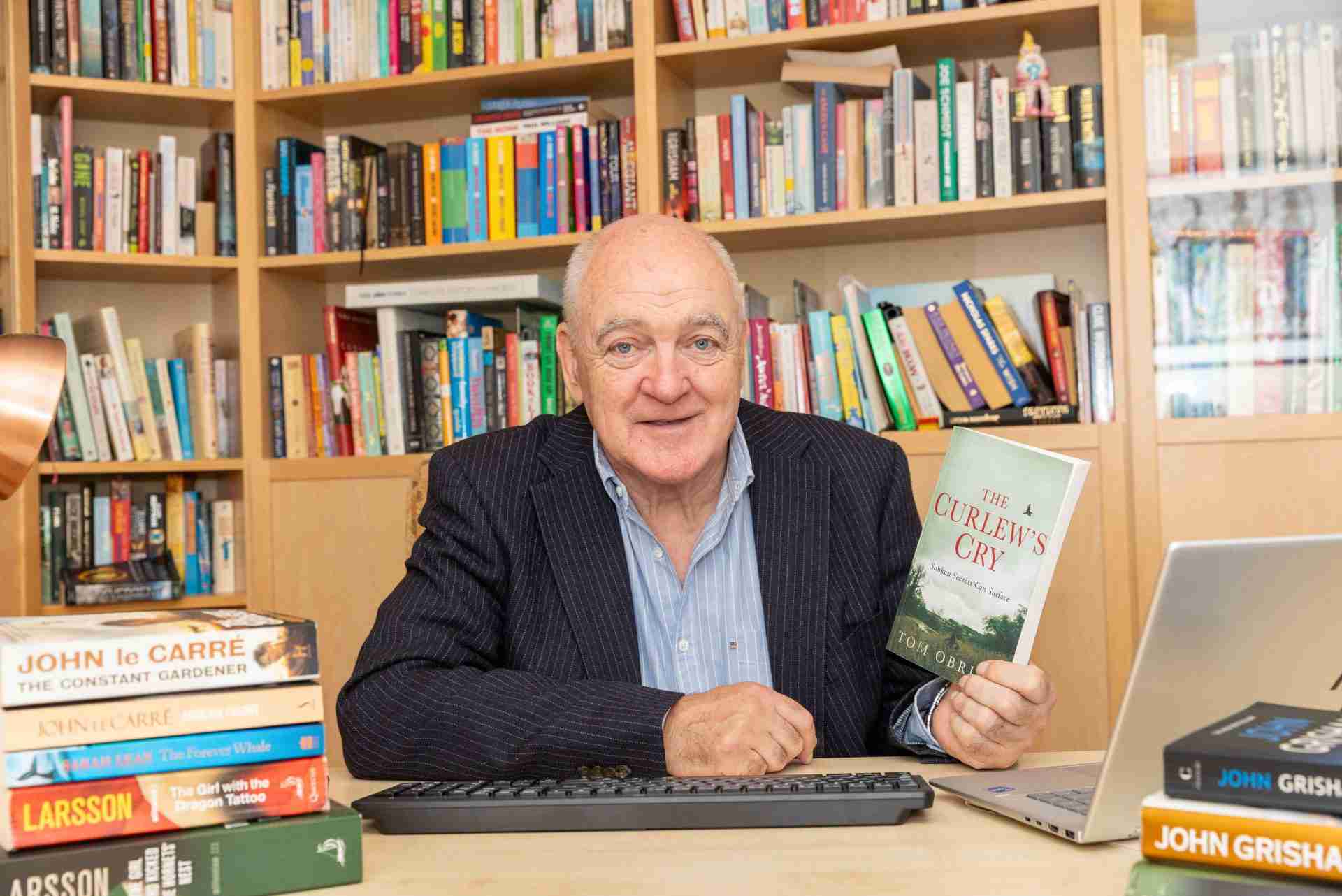

After the occasional ‘walk on the wild side’ in his youth, Tom O’Brien launches debut novel

‘Tom recalls being “interrogated” by two Gardaí in the Garbally College President’s office. When he was granted permission to go to the bathroom, he made his escape, and was “on the run” for two days’
“When I was about 21, I wrote to Fidel Castro offering to join his revolutionaries.”
I don’t usually discuss the famous Cuban communist revolutionary on Friday afternoons, so this casually delivered comment early into my interview with Tom O’Brien was a slightly surreal soundbite.
It was, however, to set the tone for an enjoyable chat, while also offering an early insight into Tom’s idiosyncratic nature.
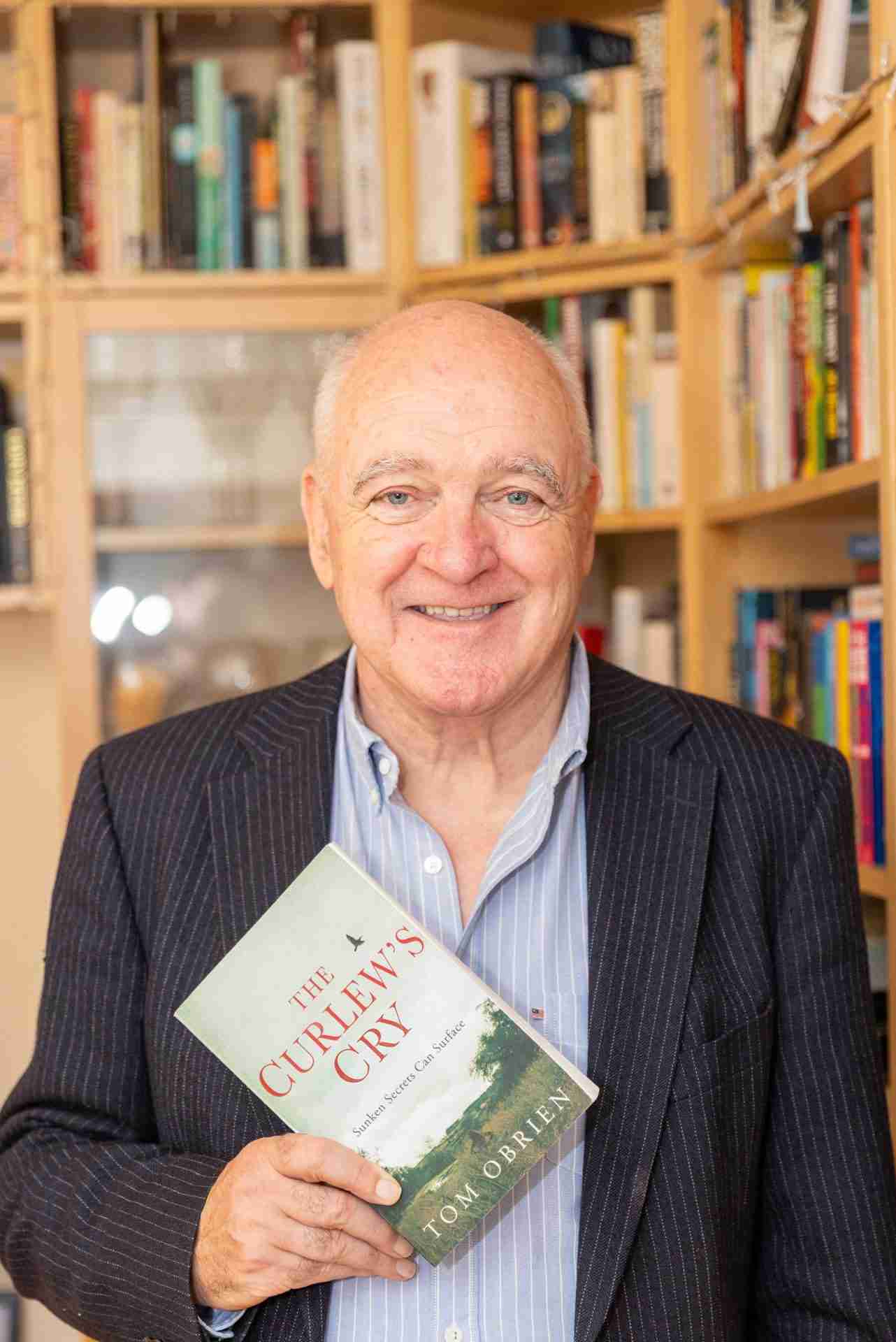
It was last Friday afternoon, and I was meeting the Creggs native to talk about his unlikely foray into fiction – a journey made possible, at least in part, by his retirement from engineering and one which has now culminated in the publication of his first novel, The Curlew’s Cry.
The offer to join Fidel Castro’s revolutionaries was just one of a number of fascinating anecdotes that peppered the interview.
‘The Garbally Liberation Front’
Tom O’Brien grew up in a large family in Creggs village. His parents, Tom and Brid, raised eight children. Both were teachers, and Tom was taught by them during his early school years.
He was something of a rebel throughout his youth.
“I did well in school and I was good at rugby and athletics, but I was a bit wild. When I went to Garbally College in Ballinasloe, I rebelled!”
It was an era when teenage boys wore their hair long, a stylistic approach which was frowned upon by the priests in college, one of whom arranged to have a barber call every Thursday, then selecting a few students and marching them off have their hair made more respectable.
Unimpressed with authority, Tom and two friends set up what they memorably called ‘The Garbally Liberation Front’.
An early act of resistance saw them cut down a tree to block the entrance to the college. Much more militant action was to follow.
The year he turned 16 years of age, Tom and two friends – let’s just say they were founder members of The Garbally Liberation Front – made a crude pipe bomb (weedkiller was involved).
“We went back to the college during the winter break. Before going to the school, we managed to get a few pints in Ballinasloe.
“So then we decided we were going to set the pipe bomb off at the front of the school. On our arrival, we heard a car coming. It was the school president. We hid in the bushes… he didn’t see us, drove on, and obviously went to bed. Then one of the lads suggested putting the pipe bomb in the back of the car, which we did. It went off… the car was destroyed. The Gardaí and the army came. I think they thought it was the UVF.”
Meanwhile, the young rebels had made a hasty escape. Roadblocks were set up and house-to-house enquiries made. Eventually, after Gardaí had spoken to local publicans, they traced the tearaways.
Tom recalls being “interrogated” by two Gardaí in the Garbally College President’s office. When he was granted permission to go to the bathroom, he made his escape, and was “on the run” for two days. The escapade made the national newspapers.
After three months of being unable to find a school that would take him, Tom’s parents finally got their son into CBS Carlow.
“I had a mighty time in Carlow, but I had broken my parents’ hearts” he says, possibly with understatement.
Later, after graduating from UCD, Tom sent that letter for the attention of Fidel Castro, c/o The Cuban Embassy, Paris. He wanted adventure, craved travel.
“Yeah, I was quite the radical” he reflects now. “I had a copy of Mao’s Little Red Book – although I didn’t read it!”
A career in engineering
Tom O’Brien may not have joined Castro’s revolutionaries, but he certainly got to travel. As a young man in his 20s, he says he “couldn’t wait to get away from Roscommon.”
Initially working in engineering with Irish Cement, he would spend time in Denmark, Taiwan, Tanzania and Zambia.
When he had got the travel bug out of his system, he happily returned to Roscommon, first working with Manton in Boyle. Years later, he set up his own business – Tom O’Brien Consulting Engineer – initially based in “our front room in Creggs”, later moving into Roscommon Town.
Working as a consultant forensic engineer, he was frequently required to give evidence in court, an experience which would provide some inspiration for his decision to pen a novel. This bring us to The Curlew’s Cry, Tom’s first book, which is now available. Proceeds will go to The Sunflower Children’s Hospice charity.
Now a youthful 70, his retirement from engineering in 2021 has been key to him realising his ambition to write the book.
“I always liked the idea of writing, and retiring made it possible. I used to do rhyming handmade picture books for my grandchildren, but I eventually took it more seriously and began writing a novel.”
Secrets and suspense
The Curlew’s Cry is quite the thriller. Set between London, Dublin and rural Roscommon, the novel is a contemporary Irish family saga, exploring a long-buried crime, hidden family secrets and the enduring question of nature versus nurture.
When a discovery in a west of Ireland bog exposes a secret from the 1970s, its consequences reach across generations.
The book begins with a discovery in a west of Ireland bog that exposes a secret buried for almost thirty years.
As forensic scientist Eve Kelly searches for answers, the trail leads back to London in the 1970s and to a hidden history that challenges everything she believed about her family.
Moving between London, Dublin and rural Roscommon, the novel explores family, identity and inheritance, and the enduring question of whether character is shaped more by nature or nurture.
Support of family
Chatting with Tom last week, it was obvious how much he loved writing the book. Real-life experiences partly informed his writing, including the sudden death of his father in 1975. His Dad, who was just 68, had just finished loading cattle for the mart. “He came into the house for breakfast. He had a sudden heart attack and died instantly.” Tom’s mother lived for a further quarter of a century. It’s clear that both his parents were a great influence on Tom.
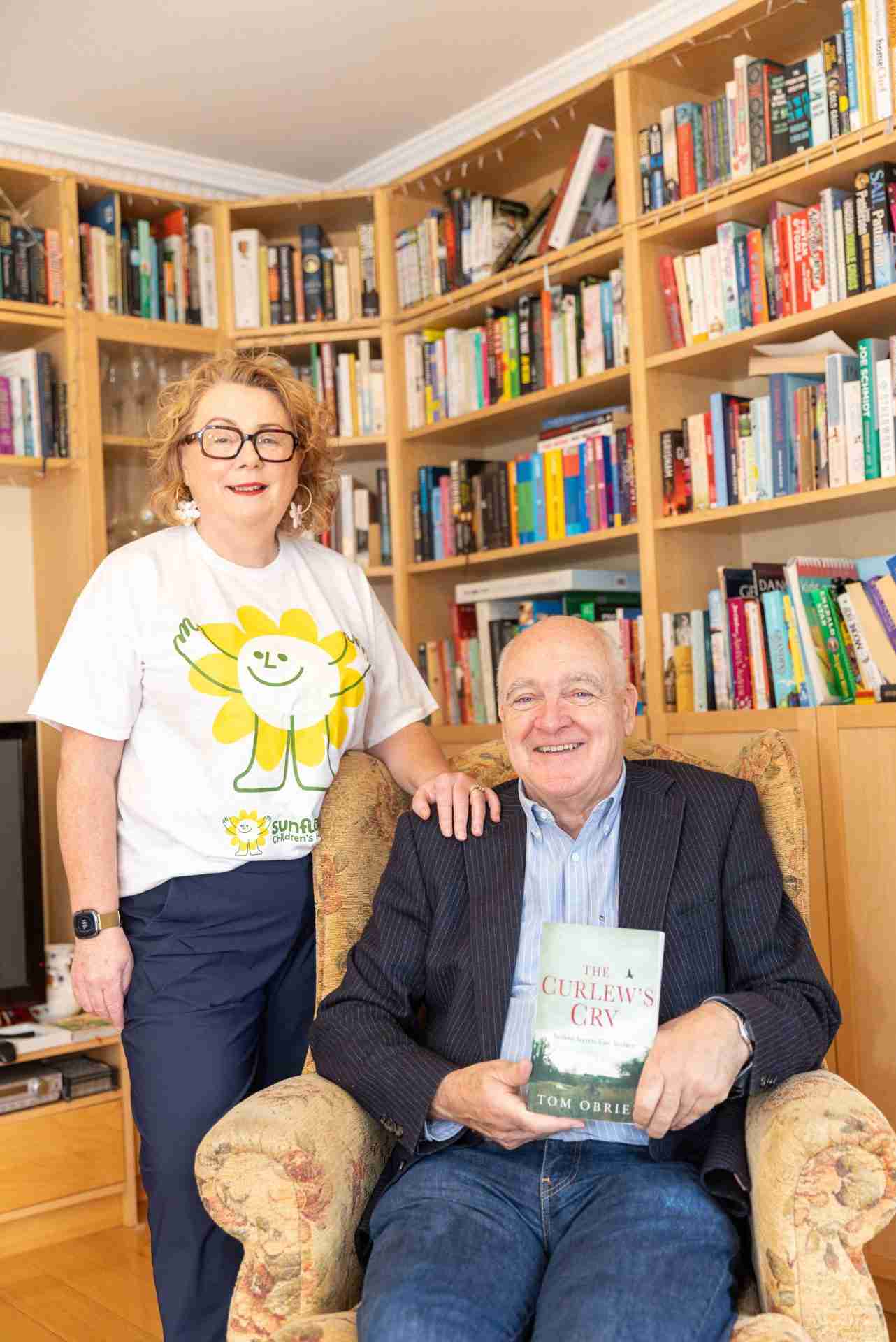
The Curlew’s Cry, moving from rural Arigna to London, with a fantastic series of twists along the way, is an enterprising debut.
“Being retired gave me the time to do it” Tom says, before qupping “I’ve enjoyed it greatly, although my wife Geraldine is heartily tired of it now!”
In fact, Geraldine – currently the President of Creggs Rugby Club, a role which Tom himself previously held – has been a great support throughout the project. One’s partner is almost inevitably the first person an author runs their manuscript by, and Geraldine, along with other family member and friends, has given Tom great encouragement throughout the process.
Tom O’Brien has realised a long-held ambition. The one-time rebel has a new passion.
Fidel Castro never wrote back to Tom. You could say that Cuba’s loss was Creggs’ gain.
Proceeds to Sunflower Children’s Hospice
Tom has pledged all proceeds from sales of the book to The Sunflower Children’s Hospice. A public launch will be held early in October (details to follow).
Currently, the book can be ordered online – go to https://www.thecurlewscry.ie – and is available in Fleming’s SuperValu in Roscommon, in local Hospice book stores. It will also be stocked in a number of other local outlets.