
On a shelf in my father’s library are three books: a volume of the County Roscommon Historical and Archaeological Society Journal, a study of Douglas Hyde, and Tony Conboy’s history of a hundred years of Gaelic games in the county. Between them they hold three quite different versions of Roscommon — its archaeology, its cultural nationalism, its sporting life — and none of those histories preserved themselves. Someone, at some point, decided each was worth writing down.
That’s really the question behind this year’s Heritage Week theme, “Heritage at Risk.” The obvious reading is buildings and monuments — a wall that could collapse, a site that could be damaged. But there’s a less visible kind of risk too: what one generation actually manages to pass on to the next, and what can disappear even when nothing has been physically destroyed.
To try to answer that, I spoke to three people who each hold a different piece of that inheritance — a working archaeological landscape, decades of local memory, and a broader argument about what a society owes to its own past.
The landscape — Mike McCarthy, Rathcroghan
This ancient royal site in north Roscommon stretches across a remarkable archaeological landscape containing around 240 recorded sites spanning some 5,500 years. For Mike McCarthy, tour guide, research assistant and Deputy Manager at Rathcroghan Visitor Centre, the landscape is important precisely because it has never simply been sealed off from ordinary life. People have continued to live and farm there.
Asked what “heritage at risk” means in practice, Mike pointed first to something less obvious than physical damage: geography itself. Ireland’s tourism investment, he said, is concentrated on the east coast and along the Wild Atlantic Way, while Rathcroghan — despite having been, for most of Irish history, the centre of Connacht — now sits well off that main route. But this has also, he argued, offered a kind of accidental protection: “We’d probably be protected a little bit more than some other sites near a large population,” he said — though the site does still contend with occasional rubbish and fires, and the balance between welcoming more visitors and protecting the landscape is one he’s conscious of managing carefully.
“If there wasn’t farming there, there wouldn’t be a monument left. Nature would have taken it back a long, long time ago,” Mike said. The monuments have survived through generations of ordinary grazing and a respect for old things that goes beyond superstition — “we have a respect for older stuff here.”
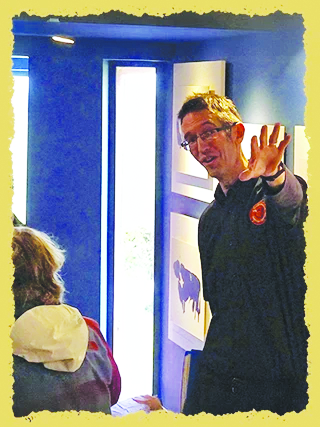
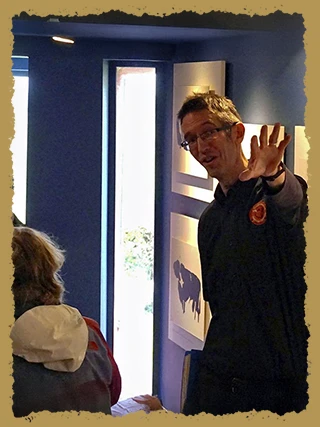
That makes farming’s future part of the heritage question. The Farming Rathcroghan project is exploring how agriculture can stay viable while protecting the landscape — but with farmers ageing and few young people taking it up, Mike worries what happens if farming disappears. “There’s no landscape there without them. That land has to be managed, it has to be grazed.”
At Rathcroghan, in other words, the people working the land are themselves part of the continuity that has allowed it to survive. “At the end of the day, we’re only caretakers,” Mike said — one link in a chain stretching back thousands of years, to a landscape once used for burial, ritual, assembly, kingship and storytelling, and used differently by every generation since. “Different generations and different eras do it in different ways,” as he put it, but the connection continues. Heritage, in his understanding, is continuity rather than preservation in aspic.
That leads into a less obvious danger — one where the mound, the field and the name Rathcroghan can all remain exactly as they are on the map, while the stories attached to them quietly stop being understood.
Mike originally trained and worked in pharmacy before his interest in history, archaeology, folklore and mythology brought him to Rathcroghan; he now also works as a storyteller, bringing the site’s associated literature to audiences beyond the visitor centre. To him, mythology isn’t an ornamental extra bolted onto the archaeology — it’s part of the heritage itself. Characters like Queen Medb and Cú Chulainn remain familiar to many Irish people, even if younger generations may not encounter the same breadth of stories previous generations did, and Mike believes modern society can be too quick to downgrade mythology simply because it isn’t scientific evidence or literal historical fact. The people who first told and eventually wrote those stories down, he argued, didn’t necessarily understand every extraordinary event in them as literal history either — the stories carried something else. “They’re a code, they’re a part of your culture, how to live your life,” he said, encoding ideas about leadership, hospitality, honour, responsibility and the consequences of bad behaviour, and — most importantly — connecting people to the physical landscape around them.
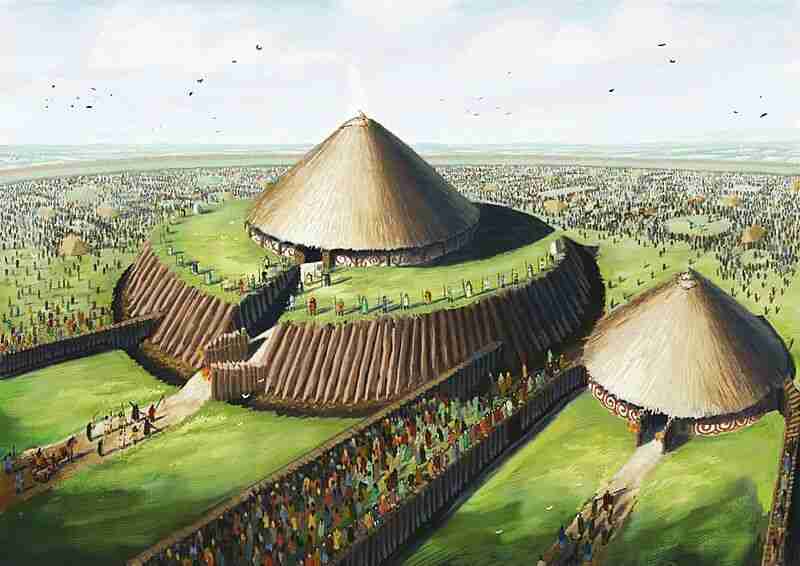
Without that connection, Mike believes it’s entirely possible for the archaeology to survive while something essential is nonetheless lost. “A story is a thing that unifies. It brings us together,” he said. The archaeology, history, mythology and literature of Rathcroghan overlap so closely that separating one from the other is difficult — remove the stories, and the monument is still there, but part of the human meaning attached to it has gone. “You can lose that connection,” he said.
It may be one of the more useful ways of thinking about heritage at risk generally: not simply asking whether something continues to exist, but whether people still understand what it means.
Mike also sees a gap between how far people will travel for Rathcroghan and how well it’s known closer to home. Visitors arrive from across Ireland and from Germany, Italy and the UK, and members of the Irish diaspora — particularly from the United States — regularly travel specifically to make a connection with the place, drawn by its significance to their own family history. It happens “multiple times,” he said, even as the site remains overshadowed nationally by the Wild Atlantic Way and the east coast. He was quick to credit Roscommon’s Heritage Office and bodies like the Heritage Council with being consistently supportive of Rathcroghan’s work, rather than framing the site as neglected by comparison — describing the effort locally as a collaborative one, with the council, local politicians and heritage bodies “all pulling in the same direction” — even if the site’s national profile doesn’t yet match its importance.
Asked, finally, whether heritage is ultimately about deciding what kind of ancestors we want to be — whether, as beneficiaries of what previous generations chose to preserve, we owe something to whoever inherits Rathcroghan a hundred years from now — Mike didn’t hesitate: “We’re the caretakers, we’re not owners,” he said. “We’re here for a time. It’s our job to curate it, to mind it as best we can, and hand it on — hopefully in a good or a better condition than the way we found it.”
Hiding in plain sight — Albert Siggins
Albert Siggins, Secretary of the County Roscommon Historical and Archaeological Society, has spent decades documenting the county’s history. Asked what he’d seen disappear, his first example was a carved stone doorway — the entrance to a small Methodist chapel that once stood on Henry Street, in the oldest part of Roscommon town, dated 1841. At some point, amid the town’s ongoing public works, it disappeared. “Nobody deliberately did it,” Siggins said. “It’s just that people are sometimes not aware” of what’s actually in the ground, or built into the walls, around them. Even a rescue at the time, he said, would only have meant setting the stone into a wall somewhere rather than losing it outright. “That was a loss, really.”
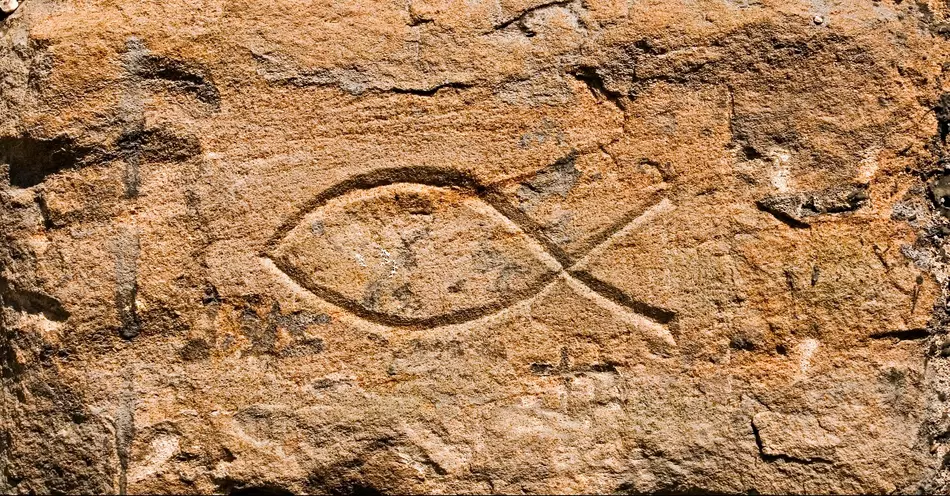
It’s a theme he returned to throughout our conversation: that the things most at risk in Roscommon aren’t the large, obviously significant monuments — “you don’t have to worry about” those, he said — but the small, unremarkable pieces nobody thought to flag as historically valuable before they were moved, built over, or simply forgotten. A stone fragment here, a doorway there, a chi-rho or ichthys fish symbol carved near Fuerty — a mark of the early Christian community there — that most people walk past without a second glance.
Some things, by contrast, survived because somebody recognised their value — even when the people who found them had no way of knowing what they’d actually uncovered. Albert told the story of a Bronze Age gold object found by a grave-digger near Roscommon in the 1840s, sold on, and eventually traced — through the patient work of archaeologists trawling old newspaper reports generations later — to a shopkeeper on the town’s main street, then through a chain of local hands interested in “golden history,” and finally to the Royal Irish Academy, where it remains on display. “Somebody who found something didn’t throw it away, didn’t try to melt it down, passed it on to people who would know,” he said. “That was a really marvellous thing.”
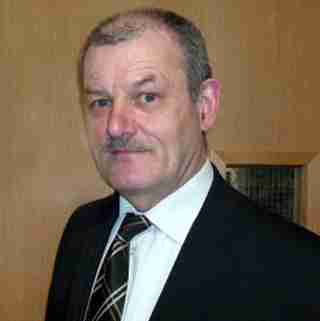
He was equally fascinated about wayside crosses — small stone markers, roughly five feet tall, found around south Roscommon in old O’Kelly territory, many inscribed simply with a request to pray for a named local family. Albert reads them as a quiet act of defiance from a dispossessed Gaelic order after the Elizabethan plantations: “They were still letting people know — we were here, we wanted to stay here, we still have a stake in looking after this part of our land.” They survive today largely by luck and by nobody having bothered to remove them — which, he pointed out, is precisely the kind of survival that can end overnight.
Underneath the anecdotes was a consistent argument: that place names, field names, and the stories attached to ordinary features of the landscape carry real historical information, and that Ireland’s rapid ‘secularisation’ and social change over his own lifetime make the job of recording them more urgent, not less. Asked whether it put more of an onus on people to record what came before, he didn’t frame it as an obligation everyone would feel equally — “not everybody’s going to come to you,” some people’s interests lie elsewhere — but he was clear that for those who do care, the window for capturing that knowledge from a living generation is closing.
When I mentioned to Albert that I’d been fortunate, when younger, to interview both my great-grandmothers as well as my grandparents about their lives, his response was immediate: “You were lucky.” It’s often only later, he observed, that people become interested in questions they could once have asked somebody directly — “when you’re older, you begin to take an interest in the people that you would like to talk to, and say, ‘why didn’t I ask them that?'” It may be one of the simplest pieces of heritage advice anyone can give. A person’s memory can hold information that exists nowhere else — the unofficial name of a field, who lived in a ruined house, an old nickname, a song, a prayer, an expression, a business that once traded on a street — and family history has become enormously popular, particularly among the Irish diaspora tracing the places their ancestors left. But the most valuable archive, Albert suggests, can still be sitting at the kitchen table.
Place names are another example he returns to. People use them every day, he noted, often without knowing what the words mean or what they reveal about the history, geography or people of an area. The name survives but the knowledge inside it may not — and that’s precisely the kind of loss that’s difficult to recognise while it’s actually happening.
Symbols and memory — John Crotty
John Crotty — author and historian, published with the History Press — supplies an argument about what happens to meaning once the object that carried it survives.
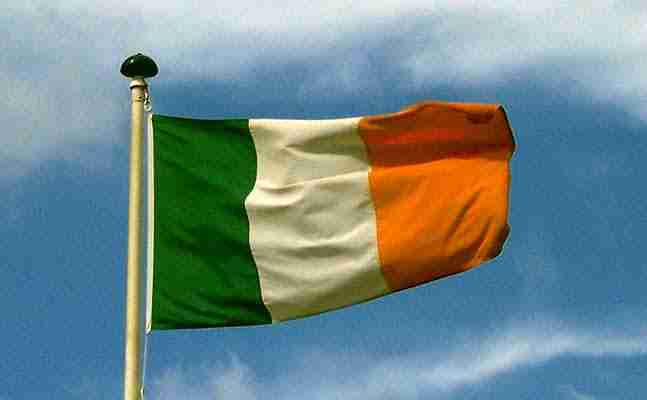
John has written two books that circle this question from different angles: one on Spike Island, “a real rich depth of Irish history” tied to Ireland’s colonial past and used at different times as a prison for nationalist and republican prisoners and as a social institution; the other on the Irish tricolour, where his aim wasn’t only to describe the symbol but to correct the historical record around it — “the meaning behind those symbols and why they were so important to people, and what exactly Irish identity meant.”
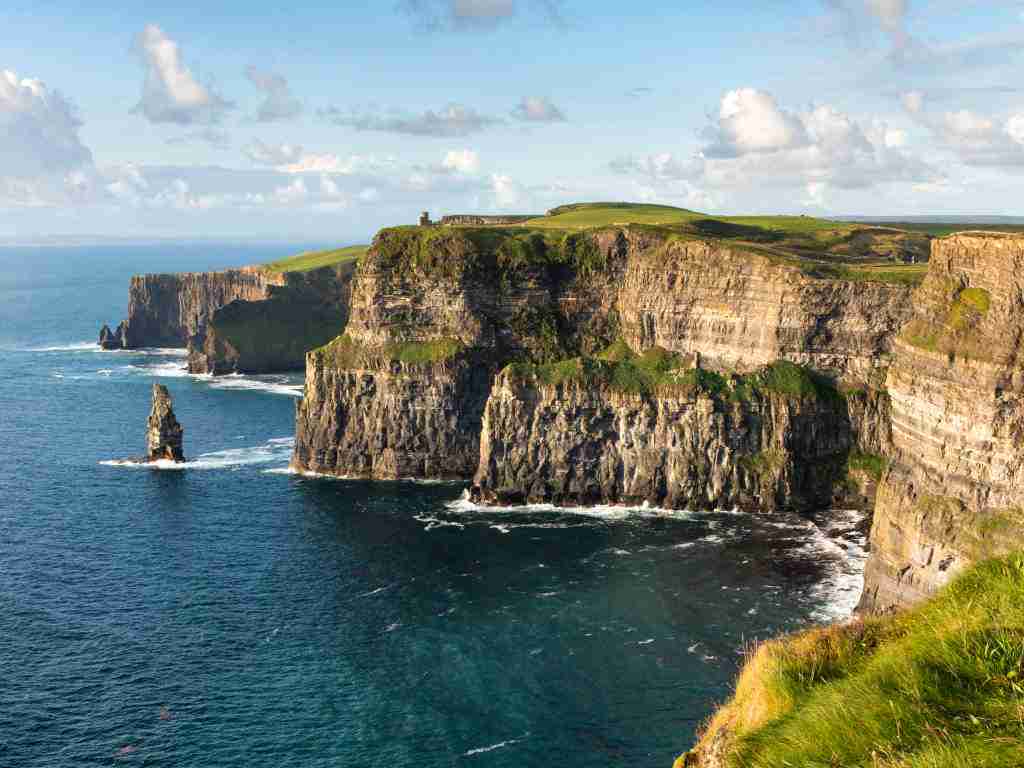
That distinction — between an object and its meaning — is really the spine of his argument. Asked whether Ireland can preserve the physical remains of its culture while losing the understanding that gave them meaning, John pointed to the Cliffs of Moher’s outline and the Hill of Tara being used as branding and symbols in recent years — “it is, in many ways, just a nod to something that was there, as opposed to something that is in there and that we’re still actively trying to maintain and preserve and pass on.”

On what’s actually at risk, John argues that modern Ireland’s reckoning with its own 20th century — and in particular with the Catholic Church — went further than correction. “We’ve seen savage revisionism of the 20th century,” he said. “While there was absolutely necessary correction and actions to take place, so often when the pendulum swings, it just means too far… if we leave it too long, we’re going to have lost too much along that journey.”
He argues for separating the Church’s failures from the broader cultural inheritance it carried — community, parish life, feast days, place names — rather than discarding both together.
He was hopeful about a younger generation’s relationship to that inheritance than his own generation’s. He described a cohort of young people rediscovering the Gaelic past without the defensiveness that shaped the generation who came directly after the Church’s decline — engaging with both Catholic and pre-Christian Gaelic identity more openly than their parents did. He was critical, in the same breath, of what he was taught in school about Gaelic Ireland in the 1980s: told it was “violent,” “warlike,” rather than, he said, that early Irish law produced some of the first European protections around divorce and humanitarian custom.
John also connects heritage directly to Ireland’s rate of demographic change. He argued that the continuity of national identity depends on integration happening at what he called “an assimilation rate” rather than one set purely by economic demand for labour, and that government has been reluctant to have that conversation openly. “There’s definitely a feeling the government has kind of shipped out with its responsibility for heritage preservation to a number of bodies,” he said, and questioned “how are they all helping to preserve what we have and make sure we don’t lose it.” He was careful to frame this as distinct from opposition to immigration itself — he described broad support, among people he speaks with, for Ireland’s role in taking in workers and refugees — but argued that the absence of public discussion about cultural continuity, alongside population change, was itself a form of avoidance.
He pointed to GAA participation rates among migrants to Ireland as one small, concrete measure of the wider question: whether Ireland’s strongest remaining cultural institutions can hold as the population that sustains them changes. “It’s remarkable,” he said. “We can see it abroad, but we can’t see what’s in front of ourselves.”
Asked what he’d most regret Ireland having failed to pass on, he drew attention to the loss of community — the parish, and “even the loss of the Irish pub” as a place where people knew their neighbours and looked out for one another. “It’s free therapy, isn’t it,” he said. “People might just be going home, and their only interaction is in work. It’s not the same.”
What we choose to keep
Between them, these three conversations point at the same idea from different angles: a landscape and mythology that survives because farmers lived alongside it rather than against it; a date stone that didn’t survive because nobody thought it mattered until it was gone; and a symbol — a tricolour, a cliff edge, a mound — that can outlast the understanding that once explained it.
None of it — the wayside crosses, the journal volumes, the mound at Rathcroghan — preserved itself. Someone always had to decide it was worth the trouble.